

How to Maintain Good Rebound of Memory Foam Pillows After Compression
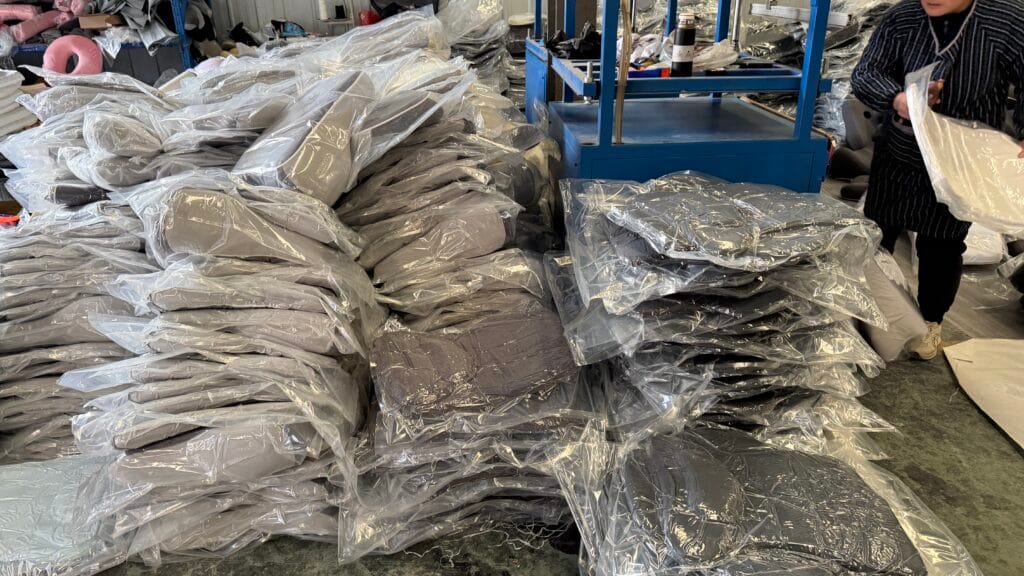
- Foam quality, which directly impacts post-compression rebound;
- Selection of compression methods, as different methods affect product quality;
- Essential quality testing for high-performance products.
| Feature | Low-Density Foam (Below 40kg/m³) | High-Density Foam (Above 45kg/m³) |
|---|---|---|
| Rebound Ability | Poor, high risk of failure to rebound | Excellent, reliable rebound |
| Durability | Low, prone to rapid sagging | High, lasts for years |
| Support | Minimal | Body-conforming and supportive |
| Cost | Lower initial price | Higher initial price |
1. Simple Folding and Pressing Method
This is a low-cost approach. Workers fold the pillows by hand and place them into simple pressing equipment. This process exerts significant pressure on the fold lines, and the foam cells in these areas may be permanently crushed. If the photos provided by the supplier show pillows simply folded in half and flattened, there is a high risk—proceed with caution in such cases!
2. Professional Roll-Packing Method
For professional compression, pillows are placed into a machine that first compresses them evenly and then rolls them into tight cylinders. This process distributes pressure uniformly across the entire pillow, avoiding sharp creases that damage the foam structure. This packaging method ensures higher rebound reliability, while also making the packaging smaller and more convenient for shipping.
How to practically assess a supplier’s product quality? Actual testing is an effective way to mitigate risks and avoid potential issues in the future. Therefore, before bulk purchasing, conduct quality testing:
The testing process simulates the entire shipping and storage cycle. Select samples that are compressed and packaged using the same method as the actual shipment. Based on the estimated shipping time—for example, a 45-day cycle—request a packaged product, store it in a warehouse for 45 days, and then have it shipped by air to simulate real-world conditions. Upon receiving the sample, record the unboxing process with a video. High-quality vacuum compressed memory foam pillows should recover approximately 90% of their shape within a few hours and fully recover within 24 to 48 hours. Check for permanent creases or flat areas—this video serves as your proof of quality.
When selecting a supplier, price is a key factor, but it shouldn’t be the sole consideration. Reliable quality and service should also be core evaluation criteria for sourcing high density memory foam pillows for shipping.