

Our Blog

How to Maintain Good Rebound of Memory Foam Pillows After Compression
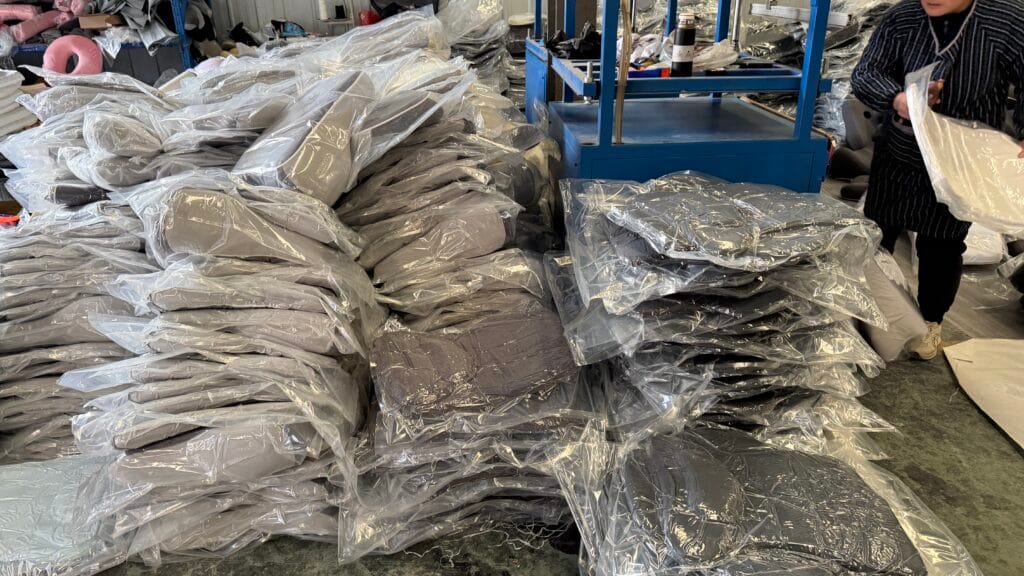
Vacuum-compressed memory foam pillow
Memory foam pillows are soft in texture but large in volume, yet relatively light in weight. As bulky cargo during shipping, they incur high freight costs, which in turn reduces profits.
 
The best way to reduce volume is to compress the pillows. Vacuum compression can effectively minimize the product’s packaging size, but this requires professional equipment and reliable product quality to support it. This avoids permanent sagging and failure to rebound after compression, ensuring that the pillows can still rebound perfectly when they reach consumers after a long sea voyage. It also guarantees product quality and helps distributors build a good reputation.
 
Vacuum compression may seem simple, but it involves many nuances. Choosing a trustworthy supplier is particularly crucial here, as multiple factors affect compression quality:
 
  1. Foam quality, which directly impacts post-compression rebound;
  2. Selection of compression methods, as different methods affect product quality;
  3. Essential quality testing for high-performance products.
 
Foam quality directly determines the final product performance. Inferior materials are prone to problems, and foam density, in particular, is the most critical factor influencing rebound. High-density memory foam has a robust molecular structure, enabling it to withstand compression and maintain full rebound. In contrast, low-density foam often fails to regain its shape after compression, resulting in flat, hard products that cannot provide proper support—seriously affecting your sales and brand reputation.
 
The core of a memory foam pillow lies in its foam inner core, and foam density is the key factor affecting product quality. This has nothing to do with the softness or hardness felt by hand; instead, it depends on the density value. The heavier the foam per unit volume, the higher the density. Higher density means more raw materials are used in the foam, leading to a stronger, more durable internal structure and better rebound performance.
 
I once had a new client who only focused on price. The supplier they found used low-density inner cores, which looked flawless in appearance. However, after over a month of compressed shipping, more than half of the pillows failed to recover their shape, causing them significant losses. As an old Chinese saying goes, “You get what you pay for.” Expensive products aren’t necessarily the best, but extremely cheap ones are definitely subpar. Suppliers have fixed costs for materials and labor, so prices can’t be lower than the normal range—it goes against business rules. Therefore, high-quality memory foam pillows must meet a certain density standard, with a minimum of 45kg/m³.
 
Here’s a simple comparison:
 
FeatureLow-Density Foam (Below 40kg/m³)High-Density Foam (Above 45kg/m³)
Rebound AbilityPoor, high risk of failure to reboundExcellent, reliable rebound
DurabilityLow, prone to rapid saggingHigh, lasts for years
SupportMinimalBody-conforming and supportive
CostLower initial priceHigher initial price
 
In terms of compression methods, incorrect techniques that cause uneven pressure can also cause permanent damage to the product—even if the product itself is of good quality.
 
High-quality suppliers use professional vacuum compression machines that apply uniform pressure, while also controlling the compression degree and duration. You can ask if they use “roll-packing” equipment—this method is much safer for foam than simple folding and pressing.
 
There are generally two compression methods in the industry:

1. Simple Folding and Pressing Method

This is a low-cost approach. Workers fold the pillows by hand and place them into simple pressing equipment. This process exerts significant pressure on the fold lines, and the foam cells in these areas may be permanently crushed. If the photos provided by the supplier show pillows simply folded in half and flattened, there is a high risk—proceed with caution in such cases!

2. Professional Roll-Packing Method


For professional compression, pillows are placed into a machine that first compresses them evenly and then rolls them into tight cylinders. This process distributes pressure uniformly across the entire pillow, avoiding sharp creases that damage the foam structure. This packaging method ensures higher rebound reliability, while also making the packaging smaller and more convenient for shipping.


How to practically assess a supplier’s product quality? Actual testing is an effective way to mitigate risks and avoid potential issues in the future. Therefore, before bulk purchasing, conduct quality testing:


The testing process simulates the entire shipping and storage cycle. Select samples that are compressed and packaged using the same method as the actual shipment. Based on the estimated shipping time—for example, a 45-day cycle—request a packaged product, store it in a warehouse for 45 days, and then have it shipped by air to simulate real-world conditions. Upon receiving the sample, record the unboxing process with a video. High-quality vacuum compressed memory foam pillows should recover approximately 90% of their shape within a few hours and fully recover within 24 to 48 hours. Check for permanent creases or flat areas—this video serves as your proof of quality.


When selecting a supplier, price is a key factor, but it shouldn’t be the sole consideration. Reliable quality and service should also be core evaluation criteria for sourcing high density memory foam pillows for shipping.

Request a Quote

Fill out the form below, and we will be in touch shortly.
Please enter the following information